Mining belt conveyor belt deviation: hazard analysis and prevention guidelines
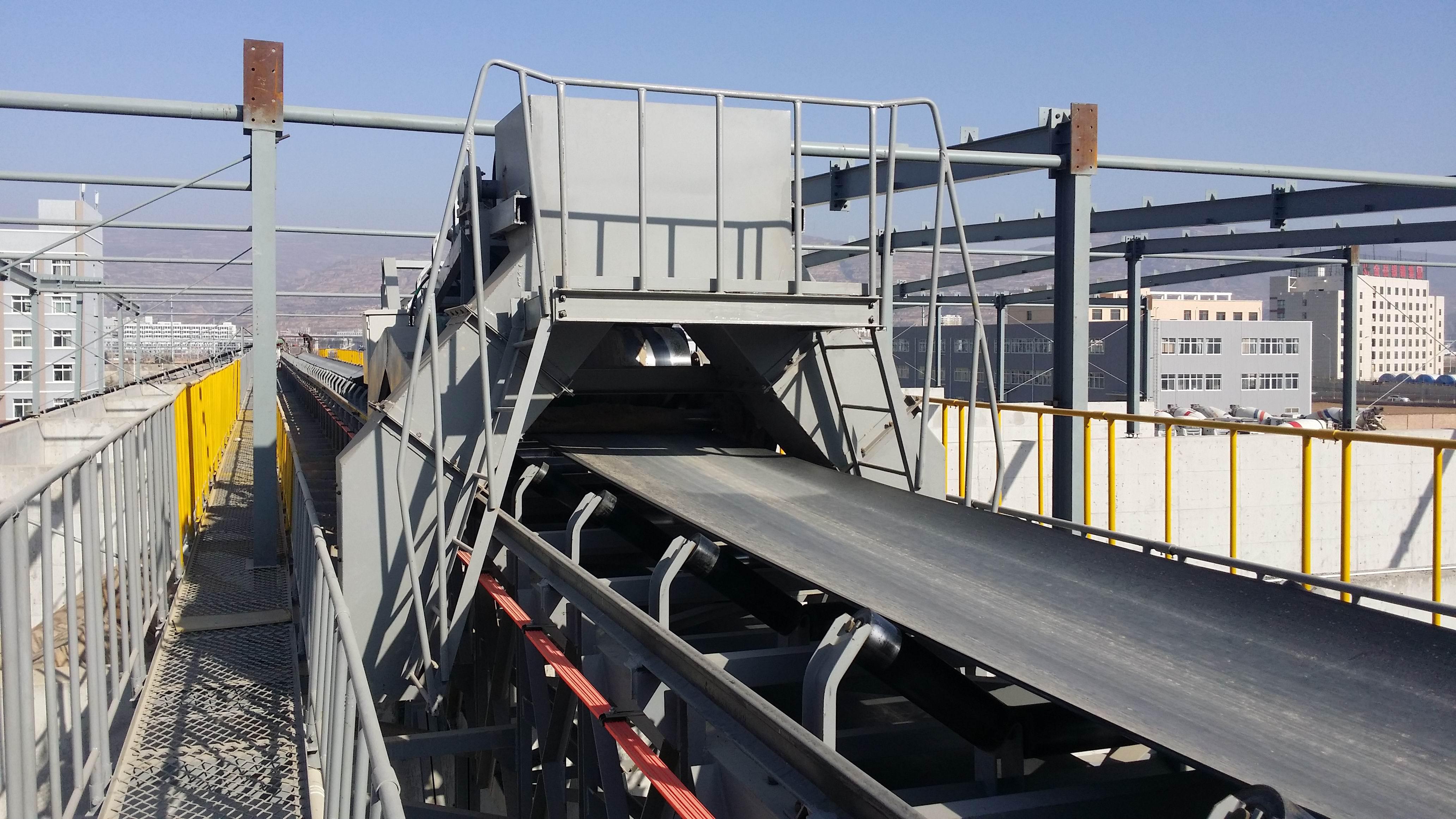
In the "arterial system" of mining production, mining belt conveyors undertake more than 80% of material transportation tasks, and their stable operation is directly related to production efficiency and operational safety. Belt deviation, as the most common equipment failure, is known as the "invisible killer in operation" by the industry - it can cause material spillage, equipment wear and tear, and serious accidents such as belt breakage, fire, and even explosion. This article will take you to uncover the mysterious veil of belt deviation, and explain in detail its hazards, causes, and scientific prevention and control measures.
The 'destructive power' of deviation: not limited to material spillage
The hazards of belt deviation have a chain reaction, far beyond intuitive understanding. According to the safety regulations for belt conveyors used in coal mines, conveyors must be equipped with anti deviation devices, which is due to the severity of their potential risks. When there is a slight deviation, the friction between the belt edge and the frame will accelerate wear, reducing the belt life by more than 60%. At the same time, the spilled materials not only pollute the environment, but may also be rolled into the drum and cause secondary damage. When the deviation exceeds 5% of the bandwidth, it will cause uneven distribution of belt tension, leading to lateral tearing; In explosive environments such as coal mines, sparks generated by the friction between the deviation belt and equipment may ignite gas and cause catastrophic consequences. What is even more alarming is that deviation often triggers emergency stop devices. According to statistics, 40% of mine conveyor shutdown failures are caused by deviation, directly affecting production continuity.
The 'culprit' of deviation: analysis of the four core causes
Belt deviation is not caused by a single factor, but rather a concentrated manifestation of multidimensional issues such as equipment, installation, maintenance, and environment.
Equipment design and manufacturing defects are fundamental causes. When the cylindricity error of the drum exceeds 0.5mm, it will cause uneven distribution of belt traction force. A coal mine caused a 30% increase in the force on one side of the belt due to this problem, and serious deviation occurred after 3 months of operation. If the deformation is caused by insufficient rigidity of the frame or welding defects, and the height difference between the two sides exceeds 2mm/m, the belt will continue to shift towards the lower side. In addition, excessive symmetry of the roller group and failure of the deviation adjustment device can disrupt the mechanical balance of the belt operation.
Installation and debugging errors are the main root cause, causing about 70% of deviation problems. The axis of the drum is not parallel, and the centerline of the frame is offset by more than 5mm, which will cause the belt to continuously deviate along the offset direction; The tension fluctuation caused by the misalignment of the tensioning device can cause periodic displacement of the belt during heavy loading, with an amplitude of up to 80mm. These installation deviations may not be significant initially, but they will accumulate and amplify over time.
Improper operation and maintenance are common causes. The roller bearings getting stuck and the surface of the drum sticking with material can cause uneven local resistance, resulting in a difference of more than 5% in belt line speed; The aging elongation of the belt exceeds 2% or there is a defect in the joint process, which can cause an imbalance in tension on both sides. In a certain gold mine, the centerline deviation of the joint is 3 °, resulting in the belt continuously deviating by 150mm. Failure to clean and lubricate in a timely manner can turn small hidden dangers into major faults.
The interference of environmental factors cannot be ignored. The deformation of the tunnel will cause the rack to tilt at an angle, and the high humidity during the rainy season will reduce the friction coefficient between the belt and the drum by 40%. These external conditions will all damage the stability of the belt operation.
Scientific Prevention and Control: From Passive Maintenance to Active Prevention
To deal with belt deviation, a closed-loop system of "detection adjustment maintenance" needs to be established. According to AQ/T 2081-2023 standard, the anti deviation device of the conveyor should automatically stop and sound an alarm when the belt exceeds the edge of the roller by 20mm. The current mainstream wireless differential detection system monitors the deviation in real-time through ultrasonic ranging and attitude sensors, and uploads the data to a cloud platform for accurate warning, solving the drawbacks of traditional mechanical detection that cannot be quantified.
In the installation process, it is necessary to calibrate the parallelism of the drum with a laser wire projector, with an error controlled within ± 2mm, and the straightness of the frame should not exceed 5mm every 25 meters. During operation, the correction can be made in real time by adjusting the angle of the rollers, the tension of the tensioning device, etc., such as adjusting the roller group towards the deviation side or replacing the worn roller coating.
Daily maintenance should follow the "daily inspection and weekly repair" system: check the deviation (deviation ≤ ± 40mm when the bandwidth is ≤ 800mm) daily, clean the surface of the drum and roller every week, calibrate the tension and check the joint status every month. For high load scenarios, automatic self-aligning rollers or airbag type correction rollers can be installed to achieve "adjustment upon discovery".
Belt deviation may seem like a minor malfunction, but it is actually a touchstone for the overall lifecycle management level of the equipment. Through precise installation, intelligent monitoring, and standardized maintenance, the deviation failure rate can be reduced by more than 80%, and a solid defense line can be built for mine safety production, making the conveyor truly an efficient and stable "transportation artery".