Troubleshooting of Roller and Drum Faults: The Key to Improving Conveyor Operating Efficiency
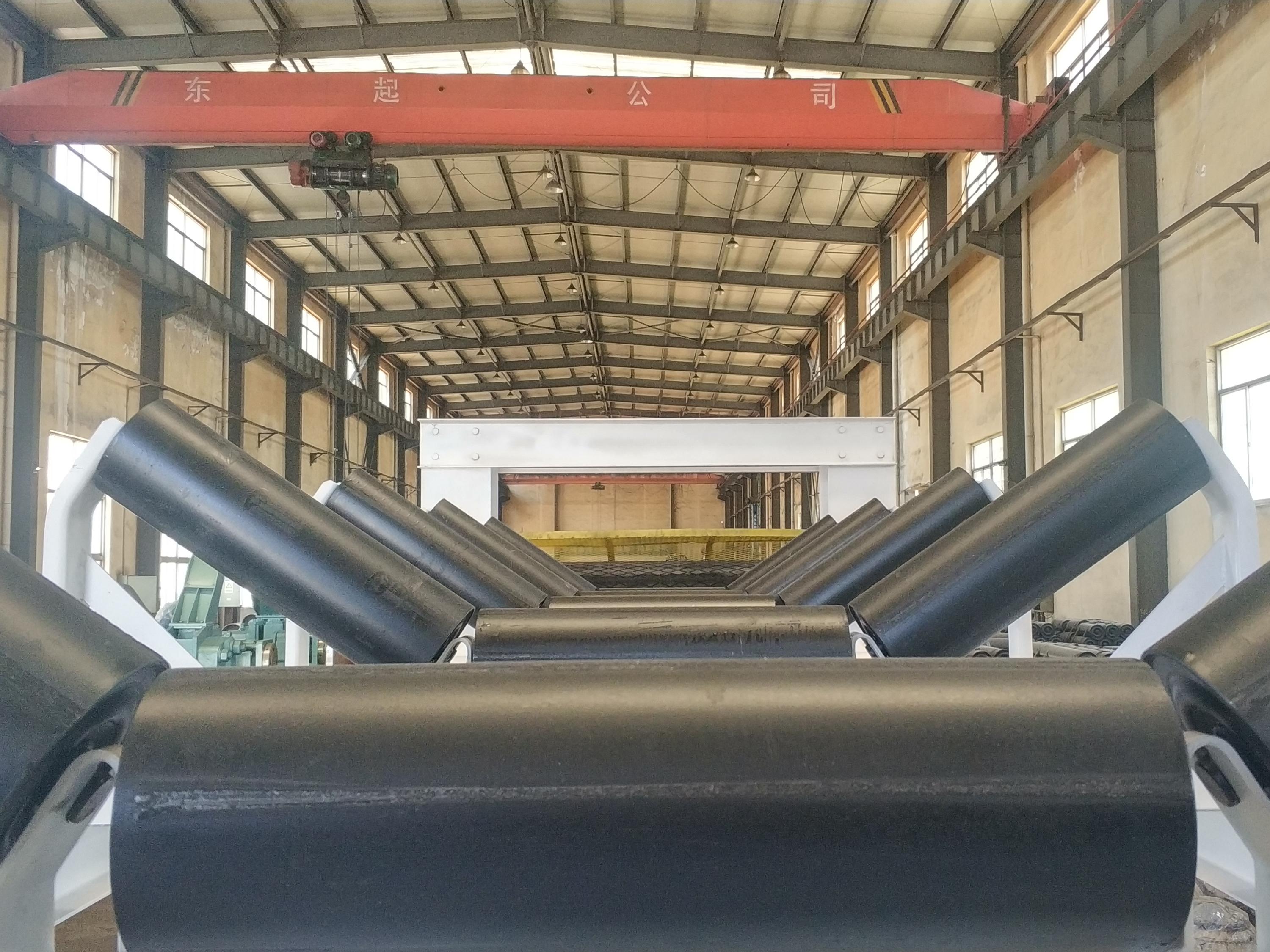
In the fields of bulk material transportation such as mining, ports, metallurgy, and electricity, belt conveyors undertake the core task of material transportation. As the "joints" and "hearts" of the entire conveyor line, the status of the rollers and drums directly affects the operation rate and maintenance cost of the equipment. According to statistics, over 70% of conveyor shutdown failures are related to abnormal rollers and drums. How to efficiently troubleshoot and prevent the failure of these two key components has become an important issue for enterprises to improve transportation efficiency and reduce operation and maintenance costs.
The large number of rollers and the installation of hundreds or even thousands of them on a long-distance conveyor are the most easily overlooked fault points. The most common malfunction is that the rollers do not rotate or get stuck. When the roller stops rotating, the belt slides and rubs on its surface, producing a harsh noise that quickly wears through the cylinder skin. The main reasons are bearing dust ingress, grease failure, seal damage, or roller being wrapped in materials. During inspection, the surface temperature of the roller can be touched by hand, and non rotating rollers will noticeably heat up; Listen to the sound at the same time, and the sharp "squeaking" sound indicates that the bearing is dry grinding. If any abnormalities are found, the stuck roller should be replaced immediately, the adhesive should be cleaned, and the bracket should be checked for deformation. Another common fault is uneven wear of the rollers or damage to the cylinder skin, manifested as surface grooves, eccentric wear, or weld cracking. This is usually caused by belt deviation, poor roller quality, or excessive impact at the drop point. When troubleshooting, it is necessary to measure the outer diameter runout value of the roller and visually inspect for dents. The handling measures are to replace the damaged rollers in groups, adjust the deviation, and install buffer devices at the feeding point. In addition, the abnormal noise of the rollers cannot be ignored. The "clunking" or "buzzing" sound emitted during operation often comes from bearing damage or poor dynamic balance. Use a listening stick to touch the shaft head to feel the vibration frequency. Severe abnormal noise indicates early damage to the bearing and should be replaced in a planned manner to avoid sudden jamming and tearing of the belt.
Compared with the roller, the drum, as the core component of driving and guiding, has a more serious impact of faults. Once a malfunction occurs, it often leads to the shutdown of the entire machine. Wear or detachment of the drum skin is one of the most common faults, manifested as the appearance of circular grooves on the surface, partial detachment of the adhesive surface, or exposure of the metal layer. The reasons are often long-term slipping friction, material jamming, or aging of the rubber surface. During troubleshooting, it is necessary to stop the machine and check the depth of wear on the adhesive layer. During operation, observe for any smoke or burnt smell. On site cold vulcanization or hot vulcanization should be carried out for drums with excessive wear and tear. If the parent body is deformed, it needs to be replaced as a whole, and a cleaning device should be installed to prevent sharp materials from being rolled in. Abnormal temperature rise of drum bearings is another type of dangerous fault. When the temperature of the bearing seat exceeds 70 degrees or even smokes, possible reasons may include improper bearing clearance, excessive or dry lubricating grease, sealing with dust, and installation with different centers. Infrared thermometers should be used for regular inspection and trend recording, and vibration meters should be used to measure radial vibration velocity (generally recommended not to exceed 4.5 millimeters per second). If the temperature continues to rise, the machine should be stopped immediately to check the bearings, and lubricating grease should be refilled (usually to one-third to one-half of the chamber volume), and the concentricity between the drum and the drive shaft should be corrected.
Roller and belt slippage are also common faults. The phenomenon is that the transmission drum rotates while the belt speed lags significantly, and the drum heats up or even smokes. The reason is usually due to the moisture of the material causing a decrease in friction coefficient, insufficient tension, or excessive wear of the coating. During troubleshooting, a speed monitor can be installed to compare the rotational speed with the belt speed, or to visually observe relative motion. The handling measures include increasing the tension, wrapping the drum in a diamond or herringbone shape to increase friction, and cleaning the surface of water or oil stains.
Single point troubleshooting is certainly important, but systematically improving operational efficiency requires a shift from "passive repair" to "predictive maintenance". The specific methods include: developing standardized inspection routes and cycles, grouping the rollers by area, listening to music daily, measuring vibration and temperature weekly, and randomly checking rotational resistance every month. At the same time, intelligent monitoring methods can be introduced by installing wireless temperature and vibration sensors at key drum bearings, using infrared thermal imaging to quickly detect heating rollers, and using acoustic arrays to identify abnormal positions. Enterprises should establish a fault database to record the replacement date of drum rubber and the service life of rollers, analyze the failure cycle to optimize spare parts inventory. Ensure that the roller bracket is aligned and the bolt tightening torque is consistent during installation; The roller bearing can adopt an automatic oil injection system to avoid manual errors.
Although the rollers and drums are small, they carry the smooth operation of the entire conveyor line. Neglecting a stuck roller may result in several meters of belt damage within a week; Neglecting a temperature rise alarm of the drum bearing may lead to major accidents such as drum locking and belt tearing. Therefore, putting fault diagnosis at the forefront, in detail, and persistently is the most economical and effective way to improve the overall operational efficiency of belt conveyors. We suggest that users include the daily inspection of rollers and drums as key performance indicators, and use intelligent tools to shift from "repairing when broken" to "condition based maintenance". Only by ensuring that each drum rotates vigorously and each idler roller is free and flexible, can we truly achieve efficient, low consumption, and long-term safe operation of the conveyor line. I hope this article can provide practical reference value for the vast number of users.