How Forklift Automation and AGV Technology Change Internal Logistics
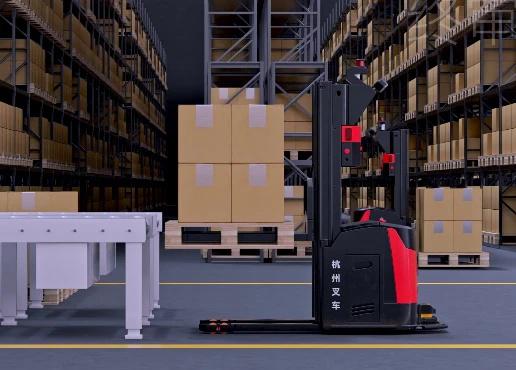
In traditional manufacturing factories and storage centers, forklift drivers shuttle between shelves and trucks, repeating operations such as handling, stacking, loading and unloading. This model relies on human experience and physical strength for a long time, facing many challenges such as rising labor costs, efficiency bottlenecks, and safety risks. In recent years, the rapid maturity of forklift automation technology and AGV (Automated Guided Vehicle) is fundamentally changing the operation mode of internal logistics. From manned driving to unmanned autonomous navigation, from single point handling to intelligent scheduling throughout the entire process, AGV and automated forklifts have become essential core equipment for smart factories and warehouses, driving the transformation of internal logistics towards higher efficiency, safety, and precision.
In the past, the pain points of internal logistics mainly focused on human resource dependence and process fragmentation. A skilled forklift driver not only requires driving skills, but also familiarity with storage locations, dispatch instructions, and operating standards. The training period is long and personnel turnover is high. At the same time, manual operation is difficult to avoid fatigue, distraction, or illegal driving, resulting in frequent incidents of cargo damage, collisions, and even personal injury accidents. More importantly, in the scenario of 24-hour continuous operation, manual work has significant efficiency fluctuations and rest intervals, becoming a bottleneck for the overall logistics rhythm. The introduction of AGV and automated forklifts is aimed at systematically solving these problems. They autonomously complete path planning and obstacle avoidance without human intervention through laser navigation, visual navigation, QR code or magnetic stripe guidance, and accurately transport pallets or goods from the starting point to the designated location. Compared to manual forklifts, automated equipment can maintain a consistent pace of operation, unaffected by emotions and physical exertion, making logistics rhythms predictable and optimizable.
The most direct change of AGV technology to internal logistics is the leap in efficiency. In traditional mode, a driver can only operate one forklift at a time to complete one handling task, and needs to travel back and forth between different areas, resulting in a lot of empty driving and waiting time. The AGV system can achieve multi vehicle collaborative operation through central scheduling software, dynamically allocating orders based on task priority, vehicle status, and path congestion, achieving "task finding people" instead of "people finding tasks". For example, in the raw material storage process, after receiving instructions from the warehouse management system, the AGV automatically goes to the unloading port to pick up the pallet, and sends it to the designated location according to the optimized path, while notifying another AGV to perform the outbound task. This parallel task greatly shortens the response time and cycle time of handling. Practical application data shows that under the same workload, using AGV solutions can improve overall throughput efficiency by 25% to 40% compared to manual forklifts, while reducing vehicle idle rates and energy consumption. Especially in scenarios that require long-distance transportation across floors and workshops, the continuous operation advantage of AGV is more obvious.
The improvement of safety is another major value brought by automated forklifts. In accidents involving manual forklifts, common causes include blind spots during turning, limited reverse visibility, driver fatigue, and pedestrian intrusion into the path. AGVs and automated forklifts are designed with multiple safety protection mechanisms built-in. They are usually equipped with laser scanners, safety touchpoints, sound and light alarms, and emergency stop buttons, which can perceive the surrounding environment in real time. When a person or obstacle is detected ahead, the vehicle will automatically slow down and stop, and resume operation after the obstacle is removed, without any misoperation due to emotions or lack of concentration. In dark, narrow, or extreme temperature and humidity working environments, AGV relies on sensors to ensure much higher safety and reliability than manual driving. The design concept of "safety first, efficiency later" has made many scenarios that pose high risks to manual forklifts, such as cold storage, chemical warehouses, or high-density three-dimensional warehouses, the areas where AGVs can demonstrate their capabilities. After introducing AGV, the enterprise significantly reduced the rate of cargo damage, equipment maintenance costs, and personal injury compensation risks, while improving the overall safety management level.
The deeper impact of forklift automation and AGV technology lies in driving internal logistics from "mechanization" to "informatization and intelligence". Traditional forklifts are just handling tools, and their operational status, location, energy consumption, and other data are difficult to collect and utilize in real time. As a digital terminal, AGV naturally seamlessly integrates with warehouse management systems, manufacturing execution systems, and upper level scheduling systems. The start, end, duration, driving distance, and battery level of each transportation task will be automatically recorded and uploaded to the management platform. Managers can view the real-time location and task progress of each AGV, analyze which area has the highest handling flow and which path is frequently congested, in order to optimize layout and allocate resources. Furthermore, combined with the artificial intelligence algorithm, the system can also predict the transportation demand for a period of time in the future, and dispatch the AGV to the high incidence area for standby in advance to achieve predictive transportation. This data-driven new model makes internal logistics no longer an auxiliary link in production or warehousing, but a real-time variable and efficiency engine in the entire supply chain scheduling decision-making.
Of course, the promotion of forklift automation and AGV technology also faces some practical challenges, such as high initial investment costs, certain requirements for the ground and environment, and the need for professional personnel to maintain and debug. But with the increasing degree of localization and large-scale application, the single machine cost of AGV has shown a downward trend year by year. Meanwhile, the advancement of flexible navigation technology makes path changes and area expansion easier without the need for large-scale site renovation. More importantly, AGV systems do not require the complete replacement of existing forklifts at once. Enterprises can pilot one or two handling routes based on actual needs, gradually expanding the scope and achieving smooth transitions. For enterprises with complex internal logistics, high frequency of operations, and sensitive labor costs, the long-term benefits brought by automated forklifts and AGV technology far exceed the initial investment.
Looking ahead, forklift automation and AGV technology will continue to develop towards a higher degree of autonomy and collaboration. 5G low latency communication makes remote monitoring and cloud scheduling more real-time; SLAM technology enables vehicles to real-time map and locate in dynamically changing environments; Multi sensor fusion enhances the reliability of perception in complex scenes. At the same time, the linkage between forklift AGVs and unmanned trucks, automatic loading and unloading equipment, conveyor lines, and robotic arms will also become closer, truly realizing the full chain unmanned operation from truck unloading to shelf storage, and then to production line workstation distribution. It can be foreseen that in the near future, the scene of internal logistics will no longer be noisy engine sounds and busy drivers, but a silent and orderly fleet of automated forklifts that tirelessly transport the "blood" of factories and warehouses, providing stable and efficient support for the operation of enterprises.
In short, forklift automation and AGV technology are reconstructing every aspect of internal logistics with unprecedented strength. From improving efficiency and ensuring safety, to achieving data-driven and intelligent scheduling, they are not only iterations of tools, but also profound changes in logistics concepts and management methods. For enterprises that hope to maintain their advantage in fierce market competition, actively embracing this technological trend and exploring automated handling solutions suitable for their own business scenarios will become a key measure to enhance their core competitiveness.